WATER DAMAGE GUIDE
ANY HOMEIN THE US
Flooded basement
Private guide. Not a government service.
Flooded basement: what to do first
Treat basement floodwater as an electrical hazard first, and stay out until the power is off. Call a plumber for a broken pipe or drain, or a water damage company for deep or dirty water.
Check electrical safety first The steps below cover the breaker box, generators, and when to call your electric utility.
WATER DAMAGE GUIDE
ANY HOMEIN THE US
Flooded basement
Private guide. Not a government service.
Check electrical safety first The steps below cover the breaker box, generators, and when to call your electric utility.
Do this now
- Stay out of standing water until the power is off. Never use the breaker box if you are wet or must stand in water. If you cannot reach it safely, call your electric utility.
- Close your main water shutoff valve if water comes from a burst pipe or water heater.
- Keep portable generators outdoors at least 20 feet from the house to avoid carbon monoxide.
- Keep children, pregnant people, and anyone with asthma out of the flooded space.
- Take photos of the water line and wet items from a safe dry spot before cleanup starts.
Who to call
Deep water, rain runoff, or dirty floodwater covers the basement floor?
You need a water damage company. Its crew pumps out standing water, sets up drying gear, and cleans contaminated surfaces.
Call a water damage restoration company.
Call for cleanupNo phone line here yet
No phone line is open here yet. We count taps, with no personal data, to know if people need one. Go to "Do this now" steps
Water comes from a burst pipe, water heater, or clogged floor drain?
You need a plumber. A plumber repairs the broken pipe, replaces failed valves, or clears the clogged drain.
Call a licensed plumber.
Call a plumberNo phone line here yet
No phone line is open here yet. We count taps, with no personal data, to know if people need one. Go to "Do this now" steps
Renting? Call your landlord or property manager first.
Your insurer may suggest a company. Ask whether you can choose your own.
Only a small puddle of clean water on bare concrete after you stopped the source? Once power is safely off, you can vacuum and dry it yourself, then review our water damage restoration cost guide.
What should I do if my basement is flooded?
Put electrical safety first. Safe Electricity warns never to step into a flooded basement if water may touch outlets, cords, or appliances, because the water could carry current and shock you. FEMA’s Ready.gov and the American Red Cross warn not to touch electrical equipment if it is wet or if you stand in water. The Borough of Oakland, NJ Emergency Management calls a flooded basement an electrical hazard.
Never use the breaker box if you are wet or must stand in water to reach it. If you cannot reach it safely, stay out and call your electric utility to shut off power at the meter (Safe Electricity). Oakland, NJ advises contacting an electrician to check if the basement is safe to enter. Have a professional check any appliance that touched water before you use it again (Safe Electricity).
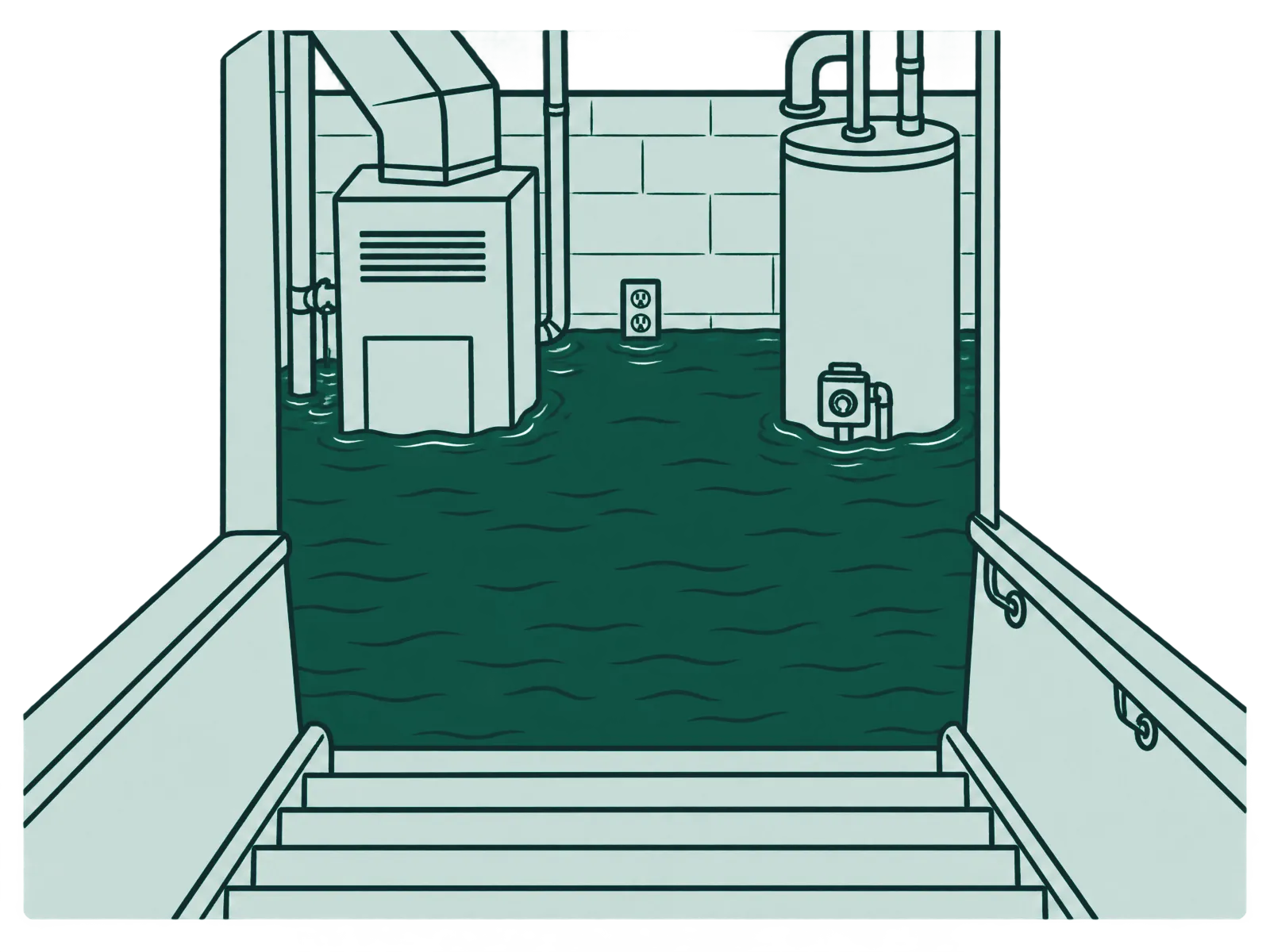
Next, find where the water came from. A broken indoor pipe needs a burst pipe shutoff and a plumber. Dark, smelly water from a floor drain points to a sewage backup. Groundwater can also seep in, says the Washington State Office of the Insurance Commissioner. Fixr’s Flooded Basement Cleanup Cost guide adds a backed-up sump pump.
Decide what you can handle safely alone and when to call a water damage company:
- Small puddles of clean pipe water on bare concrete: once power is off, pull up water with a wet-dry vacuum. Mop the rest and run fans and a dehumidifier.
- Deep water, wet drywall or carpet, or water from outside storms or drains: call a water damage company. The Red Cross says floodwater may contain sewage, sharp items, and chemicals. Ready.gov warns that it can be contaminated and hold dangerous debris.
Deep or dirty water is the time to call. See who to call.
Did a leaking water heater flood the basement? See our water heater leaking guide.
If you clean up a small spill yourself, follow these steps from the flood cleanup guide by the US Environmental Protection Agency (EPA):
- Wear an N-95 mask, goggles without vent holes, waterproof gloves, long sleeves, pants, and rubber boots.
- Throw away porous items that soaked up dirty water and cannot dry fast, like carpet pads, soaked drywall, and upholstered furniture.
- Wash hard surfaces with clean water and detergent first. Bleach and other disinfectants do not work on dirty surfaces. Never mix bleach with ammonia or other cleaners because the fumes are toxic.
- Open windows and run fans and dehumidifiers once you clean visible mold. Do not run your furnace or air conditioner if floodwater touched any part of the heating or cooling system.
- Check dryness before you rebuild. The EPA says materials should read 15 percent moisture or less on a moisture meter before paint or finish goes on. To test a concrete slab, tape a clear plastic sheet to the floor for about 16 hours. If moisture forms on the plastic, the slab is still too wet for new floors.
After the storm clears, fix outside drainage so water stays out next time. Ready.gov recommends clearing drains and gutters and considering a sump pump with a battery. The EPA mold guide and Fixr both advise sloping the ground away from the foundation. Fixr also recommends extending downspouts and cleaning gutters.
How fast does mold grow after a basement flood?
Mold starts fast in a damp basement. The EPA flood guide says mold can grow on wood, drywall, carpet, and furniture that stay wet for more than 24 hours. The EPA mold guide and the Red Cross both advise drying wet areas and items within 24 to 48 hours.
If you could not dry your home within 24 to 48 hours, the Red Cross says to assume mold grew. Run dehumidifiers until indoor humidity drops below 60 percent, ideally 30 to 50 percent (EPA). Drying usually takes several days to weeks, per the EPA. Already see or smell mold? See our mold after water damage guide.
Walls, carpet, or framing still wet after a day? Call a water damage company now.
Does homeowners insurance cover water leaking into the basement?
Coverage depends on where the water came from. Standard homeowners policies usually cover sudden and accidental indoor sources, such as a burst supply pipe or a failed appliance (Oakland, NJ, and the Washington regulator).
Standard homeowners policies usually exclude rain runoff and outside flooding:
- Groundwater that seeps in, and water through a leaking foundation, wall cracks, or gaps between building materials, are usually not covered (Washington regulator).
- Surface floodwater from heavy rain, storm surge, or rivers needs a separate flood policy through FEMA’s National Flood Insurance Program (NFIP) or a private insurer. Ready.gov and the Insurance Information Institute note that NFIP flood policies normally carry a 30-day waiting period.
- Policies usually exclude water that backs up through sewers or drains, unless you added a water backup endorsement (Nationwide).
Take photos of the water line and damaged belongings before you discard anything. Then protect the basement right away. See who to call.
Call your insurer to check what your policy covers. If you face a denial or have coverage questions, reach your state regulator in the NAIC Insurance Departments directory. You can also read our insurance water damage guide.
How much does it cost to get water pumped out of your basement?
Basement restoration costs depend on square footage, water depth, finished walls, and how dirty the water is. Fixr reports an average cost of $2,000 to $7,000. Most homeowners pay about $4,000 for a 500 to 800 square foot basement with 2 feet of Category 2 water.
Fixr also prices cleanup by water category:
| Water category (Fixr) | Total cleanup | Per square foot |
|---|---|---|
| Category 1, clean water (broken pipe or supply line) | $1,000 to $5,000 | $3.50 to $4.25 |
| Category 2, gray water (toilet, washing machine, or backed-up sump pump) | $4,000 to $8,000 | $4.10 to $5 |
| Category 3, black water (sewage, floodwater, or groundwater) | $10,000 to $15,000 | $6.25 to $7.25 |
These basement prices differ from the whole-house extraction rates in Fixr’s general Water Damage Restoration Cost guide, which our cost guide lists. Rebuild costs for drywall, floors, electrical work, or foundation repair sit on top of water extraction.
This is general information, not legal or insurance advice.
Sources
- Flooding Provides Its Own Set Of Electrical Hazards, Safe Electricity
- Flooding safety, We Energies
- What to Do if Your Basement Floods, Borough of Oakland, NJ Emergency Management
- Flood Cleanup to Protect Indoor Air and Your Health, US Environmental Protection Agency (EPA)
- A Brief Guide to Mold, Moisture and Your Home, US Environmental Protection Agency (EPA)
- Floods, Ready.gov (FEMA)
- Flood Safety, American Red Cross
- Leaks, water damage, and mold, Washington State Office of the Insurance Commissioner
- Home Insurance & Water Damage: What's Covered?, Nationwide
- Unexpected indoor waterfall? Home or renters insurance might help., Texas Department of Insurance
- Facts about flood insurance, Insurance Information Institute
- Insurance Departments, National Association of Insurance Commissioners (NAIC)
- Flooded Basement Cleanup Cost, Fixr
We checked every fact on this page against the sources below on .