WATER DAMAGE GUIDE
ANY HOMEIN THE US
Sewage backup
Private guide. Not a government service.
Sewage backup: what to do first
Stop using every drain and keep people away from sewage, which can lead to disease. Call a plumber to clear the blockage, and a water damage company if sewage hit floors, carpets, or walls.
Start sewage safety steps The steps below cover protective gear, electrical hazards, and when to call city public works.
WATER DAMAGE GUIDE
ANY HOMEIN THE US
Sewage backup
Private guide. Not a government service.
Start sewage safety steps The steps below cover protective gear, electrical hazards, and when to call city public works.
Do this now
- Stop using toilets, sinks, showers, and washers so no more wastewater enters the drain line.
- Keep children, pregnant people, and anyone with asthma or a weak immune system out of the wet room.
- Stay out of wastewater near outlets or cords. Never use the breaker box if you are wet or must stand in water. If you cannot reach it safely, call your electric utility.
- Wear rubber boots, waterproof gloves, eye protection, and an N-95 mask if you must check the room.
- Take photos before cleanup and call city public works if wastewater rushes in fast.
Who to call
A toilet, tub, shower, or basement floor drain backs up?
You need a plumber. A plumber finds the blockage in your home drain or sewer lateral and clears the line.
Call a licensed plumber.
Call a plumberNo phone line here yet
No phone line is open here yet. We count taps, with no personal data, to know if people need one. Go to "Do this now" steps
Raw sewage spilled onto floors, carpets, drywall, or belongings?
You need a water damage company. Its crew removes soaked porous items, disinfects hard surfaces, and dries the room.
Call a water damage restoration company.
Call for cleanupNo phone line here yet
No phone line is open here yet. We count taps, with no personal data, to know if people need one. Go to "Do this now" steps
Renting? Call your landlord or property manager first.
Your insurer may suggest a company. Ask whether you can choose your own.
Only one sink drains slowly, and no dirty water is rising anywhere? This guide covers sewage that backs up into the house. A single slow drain is not an emergency and needs no cleanup company.
What does a sewage backup look like?
The Insurance Information Institute (Triple-I) notes that a blocked city sewer main can push sewage up through basement floor drains. Heavy rain can do the same in cities where storm water and sewage share one pipe.
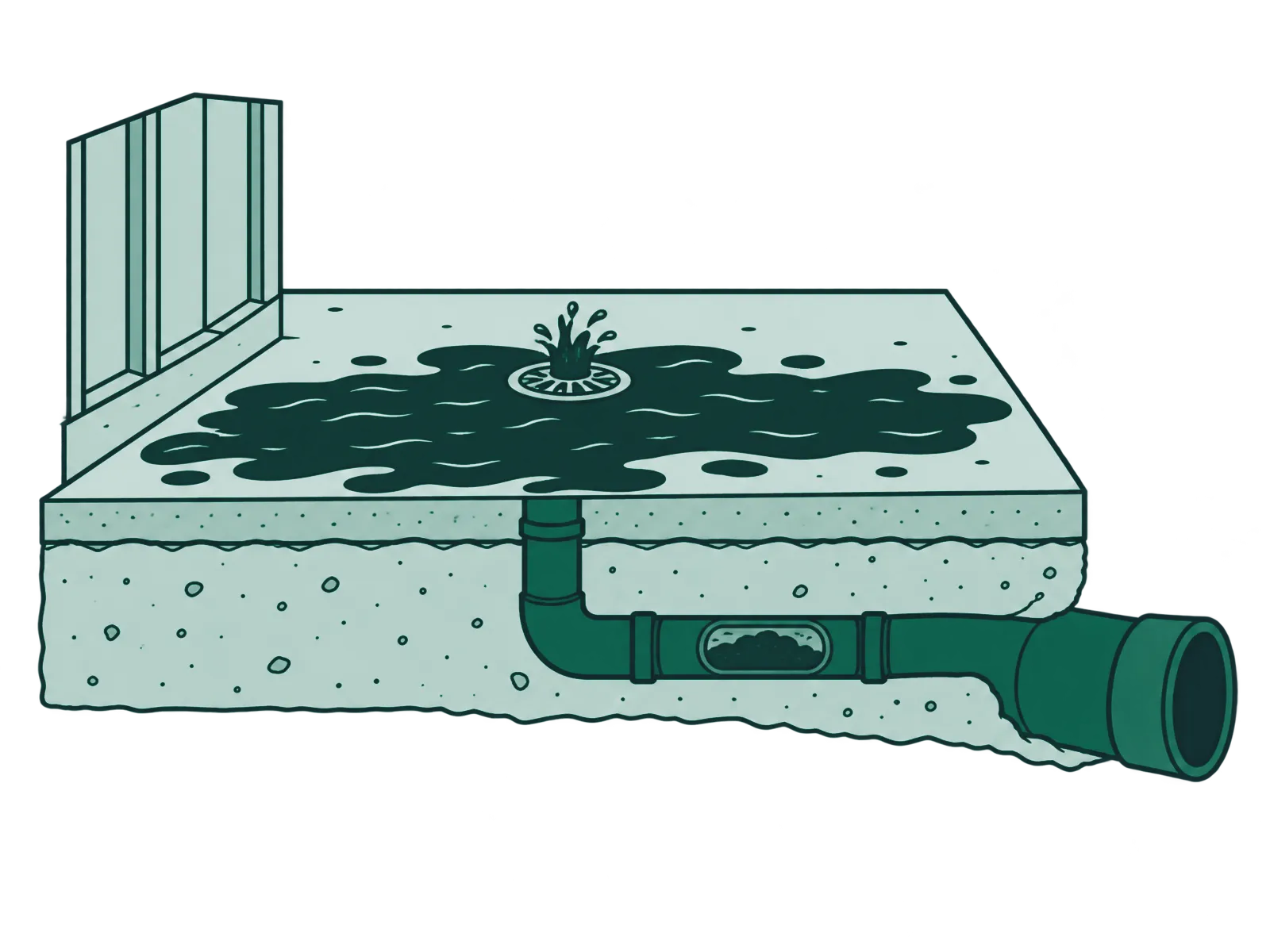
Watch for dark or foul-smelling water rising at a basement floor drain, tub, or shower.
What can cause a sewage backup?
Triple-I and the City of Portland Bureau of Environmental Services list these causes:
- Grease poured down kitchen drains, which hardens inside the pipe
- Paper towels, wipes, diapers, and feminine products flushed down toilets
- Tree roots growing into cracks or joints in buried sewer pipes
- Cracked or worn-out sewer lines (Triple-I notes that US sewer lines average over 30 years old)
- Combined storm and sewer pipes that overflow in heavy rain
- A blockage in the city sanitary sewer main in the street
To cut the risk of another backup, follow Triple-I’s advice:
- Dispose of grease properly, not down the drain.
- Cut back tree roots near the sewer line now and then.
- Never connect a sump pump or French drain to the sanitary sewer.
Ask a plumber about a backwater valve too. Portland and Triple-I describe it as a one-way valve in your drain line that lets sewage go out but not come back in.
Can a sewer backup in your basement make you sick?
Yes. Sewage carries bacteria and other germs that can make people sick (Portland, Triple-I). Wet materials left damp for more than 24 hours can also grow mold, says the US Environmental Protection Agency (EPA).
Because of those health risks, the EPA says to call in a professional with experience cleaning buildings damaged by sewage or other contaminated water. Call a water damage company if wastewater touched carpet, padding, drywall, insulation, ductwork, or a wide floor area. See who to call.
If a very small spill hits bare concrete or tile and you clean it up yourself, follow Portland and EPA safety steps:
- Wear rubber boots, waterproof gloves, protective clothes, eye protection, and an N-95 mask. Wash any cut or scrape that touches sewage right away.
- Wash hard, non-porous surfaces first with water and detergent to clear dirt and solids.
- Disinfect cleaned hard surfaces with a bleach mix (Portland cites 1 part household bleach to 10 parts water). Never mix bleach with ammonia or other cleaners because the mix makes toxic fumes (EPA).
- Throw away soaked porous items you cannot clean fully, such as carpet pads, wet wallboard, and ruined fabrics.
- Dry everything within 24 to 48 hours to prevent mold (EPA).
- Do not run your furnace or air conditioner if sewage touched any ducts or other heating or cooling parts (EPA).
- Wash your hands, clothes, and cleanup tools well once you finish.
For professional black water extraction alone, Fixr’s Water Damage Restoration Cost guide reports typical rates of $7 to $7.50 per square foot. New walls and floors cost extra after extraction. See our water damage restoration cost guide for fuller ranges.
Is the city responsible for a sewer backup?
The homeowner usually owns and maintains the sewer lateral, the pipe that runs from the house to the city sewer main in the street. Triple-I notes that homeowner responsibility usually covers the full lateral, even the section under the street or public right of way.
The city maintains the main sewer pipe in the street. Portland advises calling a plumber first to find the cause of the backup. If wastewater rushes into your basement fast, call city public works right away (Triple-I). See who to call.
Does insurance cover a sewage backup in the basement?
Standard homeowners insurance usually excludes damage from water or sewage backing up through sewers or drains, per Nationwide. A water backup endorsement can cover it, but you need to add it to your policy before a loss happens.
Take photos of wet rooms, list ruined items, and keep all cleanup and plumber receipts before you discard anything (Triple-I). Check your policy with your insurer and read our water damage insurance guide. For coverage questions, contact your state insurance regulator through the NAIC Insurance Departments directory.
This is general information, not legal or insurance advice.
Sources
- What to Do After a Sewer Backup, City of Portland Bureau of Environmental Services
- Flooding Provides Its Own Set Of Electrical Hazards, Safe Electricity
- What to Do if Your Basement Floods, Borough of Oakland, NJ Emergency Management
- Mold Cleanup in Your Home, US Environmental Protection Agency (EPA)
- Flood Cleanup to Protect Indoor Air and Your Health, US Environmental Protection Agency (EPA)
- A Brief Guide to Mold, Moisture and Your Home, US Environmental Protection Agency (EPA)
- Protect your house from sewer backups, Insurance Information Institute
- Home Insurance & Water Damage: What's Covered?, Nationwide
- Insurance Departments, National Association of Insurance Commissioners (NAIC)
- Water Damage Restoration Cost, Fixr
We checked every fact on this page against the sources below on .