WATER DAMAGE GUIDE
ANY HOMEIN THE US
Frozen pipes
Private guide. Not a government service.
Frozen pipes: how to thaw them safely
Keep the faucet open and warm an exposed pipe without an open flame. Call a plumber if a pipe is hidden, stays frozen, or splits, and a water damage company for soaked walls or floors.
Start safe thawing steps The steps below list safe heat tools and when to close your main valve.
WATER DAMAGE GUIDE
ANY HOMEIN THE US
Frozen pipes
Private guide. Not a government service.
Start safe thawing steps The steps below list safe heat tools and when to close your main valve.
Do this now
- Close your main shutoff valve right away if you spot a crack, bulge, or spraying water.
- Open the cold-water faucet on the frozen line so melting ice and water can flow out.
- Never use a blowtorch, propane heater, kerosene heater, or open flame to thaw pipes. Keep space heaters away from anything that can burn.
- Warm exposed pipe sections slowly with a hair dryer, electric heating pad, or hot wet towels.
Who to call
A pipe froze behind a wall, will not thaw, or cracked in the cold?
You need a plumber. A plumber thaws hidden lines and repairs split copper, PEX, or PVC pipes.
Call a licensed plumber.
Call a plumberNo phone line here yet
No phone line is open here yet. We count taps, with no personal data, to know if people need one. Go to "Do this now" steps
A burst frozen pipe soaked walls, ceilings, or floors?
You need a water damage company. Its crew extracts standing water and sets up drying gear for soaked materials.
Call a water damage restoration company.
Call for cleanupNo phone line here yet
No phone line is open here yet. We count taps, with no personal data, to know if people need one. Go to "Do this now" steps
Renting? Call your landlord or property manager first.
Your insurer may suggest a company. Ask whether you can choose your own.
Water still running normally and preparing before a hard freeze? You do not need an emergency plumber today. Start with the winter prep list, and find your shutoff valve with our burst pipe guide.
What should you do if your pipes freeze?
If only a trickle comes out when you turn on a faucet, the American Red Cross says to suspect a frozen pipe. Family Handyman also notes condensation or small surface cracks on exposed lines, bulging pipes, banging or gurgling sounds, or a sewage smell if an exterior sewer line froze.
Before you thaw a frozen pipe yourself, keep a bucket and towels nearby. Know where your main shutoff valve sits in case ice already cracked the line. Keep the faucet open while you apply gentle heat so flowing water melts the ice (Red Cross). Safe heat tools include a hair dryer, an electric heating pad wrapped around the pipe, or hot wet towels. You can also use a space heater kept clear of anything flammable. Never use a blowtorch, propane or kerosene heater, or any open flame.
The Portland Water Bureau warns not to open your curb water meter box, because that raises the chance that water in the meter freezes. Once water flows again, keep a small trickle open until the freeze passes, and check every other faucet because if one pipe freezes, others may freeze too (Red Cross).
When should you call a plumber for frozen pipes?
Call a plumber if you cannot find the frozen spot, cannot reach it, or cannot thaw it (Red Cross).
Pipe material changes how likely a freeze is to split the line:
- Copper pipes: Family Handyman and Bob Vila note that rigid copper pipes crack more easily when ice expands inside them.
- PEX tubing: PEX can still freeze (Family Handyman), though Bob Vila notes it can expand with ice and resist freeze-breakage better than copper.
If a pipe splits and leaks as the ice melts, close your main shutoff valve right away. Our burst pipe guide shows where it is. Then call a plumber, and a water damage company if water soaked walls or floors.
How long does it take pipes to freeze at 20 degrees?
Pipes can freeze in as little as 6 to 8 hours, so they can freeze overnight, per Family Handyman. If the outside temperature drops below 32 degrees F, unprotected pipes are more likely to freeze. Indoor pipes are more protected. They typically need 20 degrees F or lower to freeze, according to the International Code Council as cited by Family Handyman.
Do you drip hot or cold water to keep pipes from freezing?
Let cold water drip from faucets on exposed pipes when the weather is very cold. The Red Cross says running water through the pipe, even at a trickle, helps prevent freezing. Open kitchen and bathroom cabinet doors too, so warmer air moves around the pipes. Move household cleaners out of reach of children first (Red Cross).
Can your pipes freeze in a heated house?
Yes. Pipes in unheated spots, or in outside walls with little insulation, can freeze even when the rest of the house is warm. The Red Cross lists these spots among the places where pipes freeze most often:
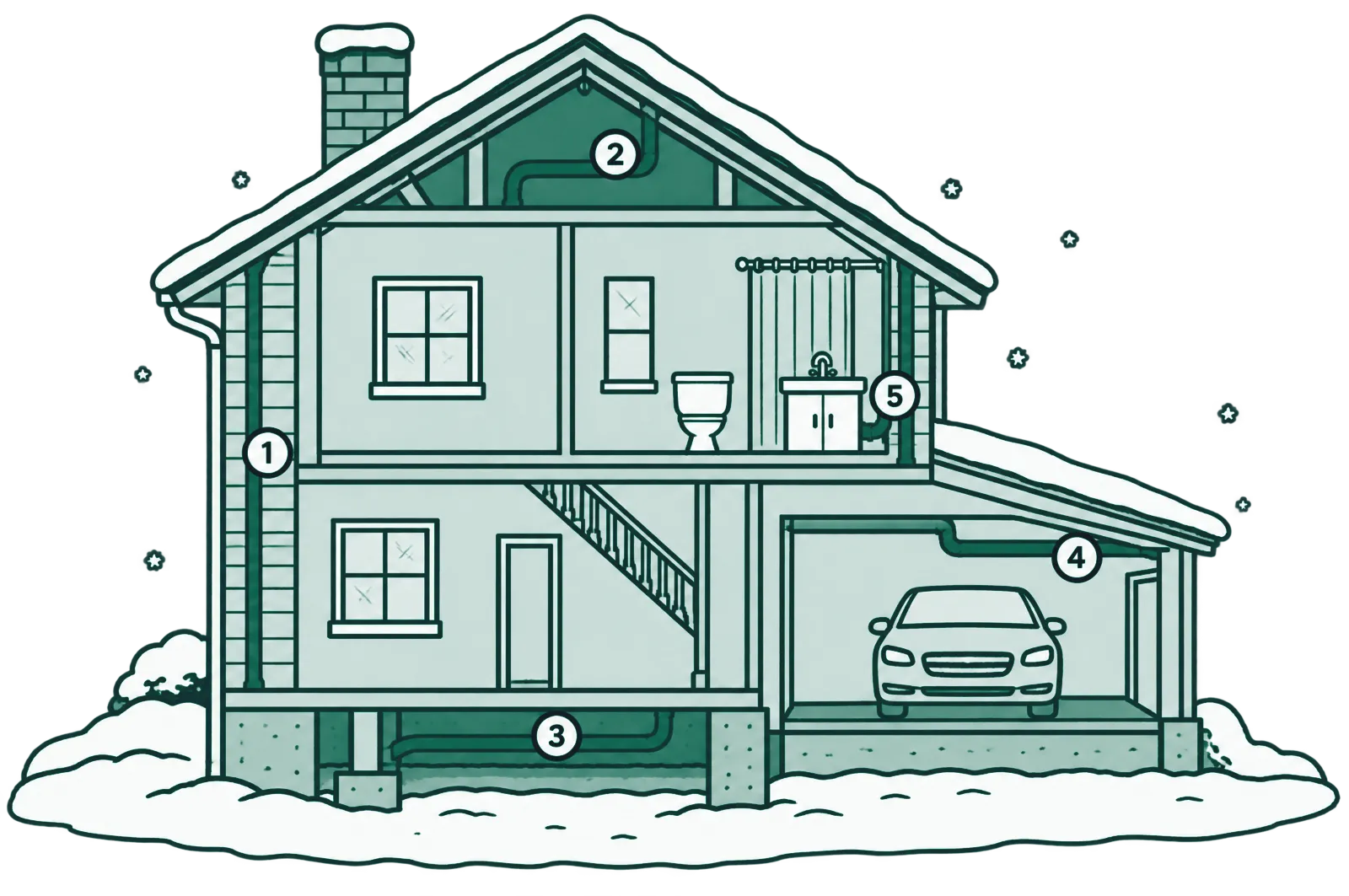
- Inside an outside wall with little insulation
- In the unheated attic
- In the crawl space under the house
- In the unheated garage
- Under a sink on an outside wall, such as a kitchen or bathroom cabinet
Outdoor hose bibs, pool supply lines, sprinkler lines, and the spot where the water line enters through the foundation also freeze often (Red Cross).
Prepare before cold weather hits. These steps come from the Red Cross, Portland, and the DC Department of Insurance, Securities and Banking (DC DISB):
- Disconnect and drain garden hoses, close indoor shutoff valves to outdoor spigots, open outdoor faucets to drain them, and add foam faucet covers.
- Wrap exposed hot and cold pipes in unheated areas with foam pipe sleeves or UL-listed heat cable.
- Seal cracks around pipe entries, close foundation vents, and keep garage doors shut if water lines run inside.
- Keep your thermostat steady day and night in hard freezes. When you travel in winter, keep heat at 55 degrees F or higher, or close the main valve and drain the plumbing (Red Cross, DC DISB).
Does insurance cover frozen pipe water damage?
DC DISB says most homeowner policies will cover damage from a frozen pipe that bursts. The National Association of Insurance Commissioners (NAIC) says homeowners policies cover damage from a sudden and accidental discharge from a plumbing system. One key rule applies. Policies usually require you to keep reasonable heat in the house, or close the water supply and drain lines in a vacant home (DC DISB).
If your insurer finds you did not take steps to prevent freezing, such as keeping the heat on, it may not cover the damage (NAIC, DC DISB). Take photos of the split pipe and wet rooms right away. The mold guide from the US Environmental Protection Agency (EPA) says to dry water-damaged areas within 24 to 48 hours to prevent mold. If water soaked walls or floors, call for help now. See who to call.
Not sure what your policy covers? Read our water damage insurance guide or reach your state insurance regulator through the NAIC Insurance Departments directory.
This is general information, not legal or insurance advice.
Sources
- Preventing & Thawing Frozen Pipes, American Red Cross
- How to prepare your plumbing for winter weather, City of Portland Water Bureau
- If My Frozen Pipes Burst, Am I Covered by Insurance?, DC Department of Insurance, Securities and Banking
- Will My Homeowners Insurance Policy Cover Water Damage From a Burst Pipe?, National Association of Insurance Commissioners (NAIC)
- Insurance Departments, National Association of Insurance Commissioners (NAIC)
- A Brief Guide to Mold, Moisture and Your Home, US Environmental Protection Agency (EPA)
- Frozen Pipes Signs and How to Unfreeze Them, Family Handyman
- PEX vs. Copper: Which Pipes Are Best for Your Plumbing Project?, Bob Vila
We checked every fact on this page against the sources below on .